Best Magnetic Tape Measure (2026)

About the author
The one-slip moment that throws off a cut list
You hook a tape on a steel stud or angle iron, reach out to mark your line… and the hook slips. Or you’re measuring solo on a ladder and you need a third hand to keep the end planted. It’s rarely a huge error, but it’s enough to turn a “close” mark into a bad fit.
If you’re shopping for the best magnetic tape measure, the goal is simple: keep the end planted on ferrous metal so you can mark accurately. That’s why a magnetic tape measure exists—to hold the end for you on steel so you can scribe, transfer, and re-check without fighting the hook.
What a magnetic tape measure is best at (and when it helps most)
Magnetic tapes shine on steel studs, angle iron, duct, electrical strut, and shop fixtures. They’re especially helpful when you’re working alone, because the magnet can hold the hook while you mark.
Disclosure: As an Amazon Associate, ToolLayout may earn from qualifying purchases. This doesn’t change what we recommend.
This page covers the best magnetic tape measure picks for 2026—five real options that match common DIY, woodworking, and light trade use:
- Strong magnetic hook that stays put on steel
- Easy-to-read blade so you mark faster with fewer misreads
- Standout + durability that holds up in a real shop
If you want the basics first, start at Tape Measures hub.
Best Magnetic Tape Measure (2026): Top 5 Picks
| Image | Product | Best for | Key feature | View on Amazon |
|---|---|---|---|---|
 | Milwaukee 48-22-0325 Magnetic Tape Measure (25 ft) | Best all-around magnetic tape for daily DIY + jobsite tasks | Strong magnetic hook + durable blade with easy-to-read markings | View on Amazon |
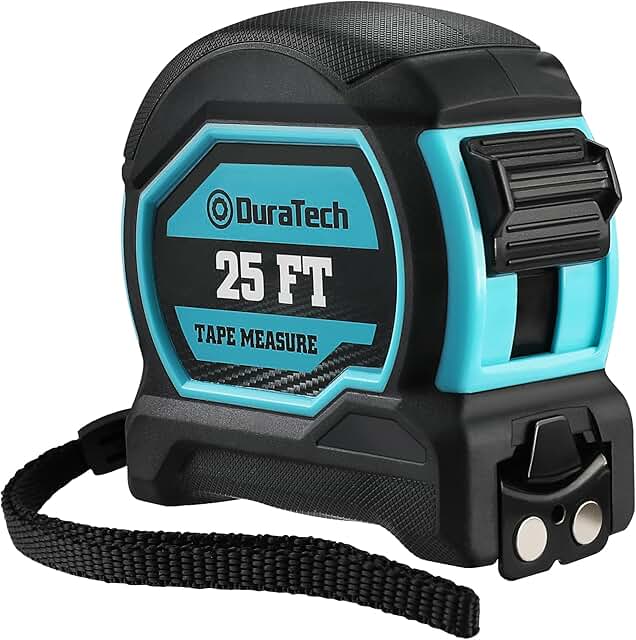 | DEWALT DWHT36225S ToughSeries Magnetic Tape Measure (25 ft) | Best for tougher environments and drops (shop + jobsite) | Reinforced housing feel + magnetic end for one-person measuring on steel | View on Amazon |
 | Stanley FATMAX FMHT33338L Magnetic Tape Measure (16 ft) | Best budget-first magnetic tape for occasional use | Compact size with magnetic hook for quick solo measuring | View on Amazon |
 | Komelon SM5425 Speed Mark Magnetic Tape Measure (25 ft) | Best for fast marking and readability (layout-heavy work) | High-visibility blade with standout-friendly design + magnetic hook | View on Amazon |
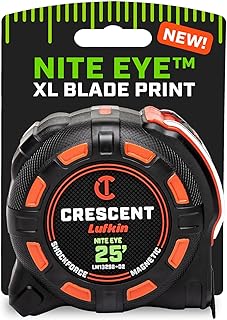 | Crescent Lufkin Shockforce Nite Eye Magnetic Tape Measure (25 ft) | Best for low-light readability and night/garage work | High-contrast “Nite Eye” style blade + magnetic hook | View on Amazon |
1) Milwaukee 48-22-0325 Magnetic Tape Measure (25 ft) — Best overall for straight holes (most DIY + woodworking)
A dependable magnetic tape that’s easy to read, easy to control, and strong where it matters most: the hook.
Watch for: magnets grab metal filings, so wipe the hook clean so it seats flat on your work.
Best for: everyday measuring on steel studs, angle iron, shop fixtures, and general DIY
What you’ll like: the magnetic end helps when you can’t hold the hook and mark at the same time
🧐 Quick verdict: The most useful all-around magnetic tape measure for most people—strong hook, solid feel, and easy day-to-day handling.
| Pros ✅ | Cons ⚠️ |
|---|---|
| ✅ Magnetic hook helps with one-person measurements on steel | ⚠️ Magnets collect metal dust—keep the hook face clean |
| ✅ Comfortable size for a 25 ft class tape | |
| ✅ Good “daily driver” choice for shop and around-the-house work |
Why it’s a top pick: On a magnetic tape, the hook is the whole point. This one grabs steel reliably, so you can extend the blade, steady it, and mark without doing the “pin it with a finger and hope” routine.
Decision bullets
- Compatibility: Best on ferrous surfaces (steel studs, steel angle, strut, toolboxes). Magnets won’t help on aluminum, stainless (many types), wood, or plastic.
- How it stays accurate: A clean, flat hook face matters more than people think. If filings build up, the hook can rock and change your reading.
- Control: Choose a tape that feels stable when extended. Most errors happen when the blade twists during marking.
- Workholding reality: Use the magnet to hold the end, but keep the blade aligned with your mark. Don’t measure with the blade bowed sideways.
- Best for: General DIY, shop builds, and any time you measure alone on steel.
Shop tip: If you do a lot of metric layout too, keep a dedicated metric tape on hand so you avoid conversion mistakes: best metric tape measure
2) DEWALT DWHT36225S ToughSeries Magnetic Tape Measure (25 ft) — Best for repeatable angles + controlled
A tougher-feeling magnetic tape for rough handling, jobsite bags, and constant on/off the belt.
Watch for: keep your thumb off the blade edge. Fast retraction can kink a tape if it snaps back uncontrolled.
Best for: durability-first users who still want a magnetic hook
What you’ll like: sturdy housing feel and a hook that makes steel measuring less fussy
🧐 Quick verdict: Best pick when you’re hard on tapes and want a magnetic hook for steel work without babying the tool.
| Pros ✅ | Cons ⚠️ |
|---|---|
| ✅ Built for tougher handling and frequent use | ⚠️ If you want “compact,” this style can feel bulky in a pocket |
| ✅ Magnetic hook helps when measuring steel solo | |
| ✅ Good choice for garage/shop + occasional jobsite work |
If you drop a tape on concrete, toss it into a toolbox, or yank it out one-handed, durability matters as much as the magnet. This is the style to buy when you’re tired of a tape feeling “loose” after a few weeks of real use.
Why it’s a top pick: It’s a practical magnetic tape for people who use a tape constantly—magnetic hook for steel, plus a tougher build for daily wear.
Decision bullets
- Compatibility: Great for steel framing, strut, and shop fabrication layouts; still works as a normal tape on wood.
- Hook performance: A magnetic hook helps most when the end would otherwise slip (overhead, vertical steel, awkward reach).
- Readability: Prioritize a blade you can read quickly at arm’s length, because misreads happen before “accuracy” is even a factor.
- Care tip: Don’t let the blade slam in. Guide it back to protect the hook and reduce kinks.
- Best for: Rougher environments, frequent measuring, and users who want a tougher magnetic tape.
3) Stanley FATMAX FMHT33338L Magnetic Tape Measure (16 ft) — Best budget-first choice (occasional use, still better than freehand)
A solid starter option if you want magnetic help without committing to a heavier “daily driver” tape.
Watch for: shorter tapes are easier to control, but make sure 16 ft fits your typical projects.
Best for: apartment/garage DIY, quick installs, and smaller projects
What you’ll like: compact size is easier to handle and less likely to twist while marking
🧐 Quick verdict: Best budget-friendly magnetic tape when you want a simpler, smaller tape for occasional measuring.
| Pros ✅ | Cons ⚠️ |
|---|---|
| ✅ Lower-cost way to get a magnetic hook for steel measuring | ⚠️ 16 ft length isn’t ideal for bigger room layouts or long rips |
| ✅ Compact and easy to carry | |
| ✅ Great “first magnetic tape measure” for beginners |
Not everyone needs a 25 ft tape with big standout. For smaller builds, furniture tweaks, garage storage, and quick repairs, a shorter tape is often easier to keep straight and easier to read.
Why it’s a top pick: It’s a realistic entry point into magnetic tapes. You still get the “hook stays put on steel” advantage, but you don’t carry a larger tape you won’t use.
Decision bullets
- Compatibility: Great for short-to-medium measurements, cabinet parts, brackets, and quick steel-stud checks.
- Beginner handling: Shorter blades generally twist less, so you can mark more consistently.
- Magnet use: Ideal for holding the end on steel while you mark with a pencil/marker in your other hand.
- Workholding: If the magnet won’t stick (paint, dust, non-ferrous metal), treat it like a normal tape and hook an edge instead.
- Best for: Occasional use and a magnetic tape measure for beginners.
Quick win: When accuracy matters, make your mark as a thin line and “pull” the tape the same way every time: (guide coming soon)
4) Komelon SM5425 Speed Mark Magnetic Tape Measure (25 ft) — Best for edge drilling + small parts
A great pick when you do lots of marking and want quick, clear reads without squinting.
Watch for: don’t let the blade twist. Keep it flat to the face you’re marking for cleaner transfer.
Best for: layout-heavy projects where speed and readability matter
What you’ll like: easy-to-see markings plus a magnetic hook for steel work
🧐 Quick verdict: Best for fast marking and shop layout when you want a magnetic hook and a blade that’s quick to read.
| Pros ✅ | Cons ⚠️ |
|---|---|
| ✅ High-visibility markings help reduce misreads | ⚠️ Readability features don’t replace good technique (flat blade, consistent pull) |
| ✅ Magnetic hook is handy on steel framing and shop fixtures | ⚠️ Like any magnet, it’s weaker on dirty/painted surfaces |
| ✅ Good “layout tape” for repetitive measuring and marking |
Most tape mistakes are simple: you misread a tick, the blade twists, or the hook slips. A tape that’s quick to read helps you move faster with fewer “wait… was that 7/16 or 5/8?” moments, especially on repetitive marks.
Why it’s a top pick: Readability is a performance feature. If you mark faster and second-guess less, your work goes quicker and your cut list stays cleaner.
Decision bullets
- Compatibility: Great general-purpose tape for wood and metal work; magnet is a bonus for steel.
- How it improves results: Clear markings reduce misreads, and a magnetic hook reduces end-slip on steel.
- Technique: Keep the blade flat on the face you’re measuring. When precision matters, mark with a sharp pencil or knife.
- Magnet reality: If the steel is painted, dusty, or rounded, the magnet may not seat perfectly—verify before you trust it.
- Best for: Layout-heavy DIY, shop builds, and faster marking on steel.
Learn the technique: how to choose a magnetic tape measure
5) Crescent Lufkin Shockforce Nite Eye Magnetic Tape Measure (25 ft) — Best compact guide for common sizes + round stock
A strong choice if you measure in garages, basements, or anywhere the lighting isn’t great.
Watch for: high-contrast blades help, but still avoid parallax—look straight down at your mark.
Best for: low-light measuring and quick reads while moving fast
What you’ll like: “Nite Eye” style readability plus a magnetic hook for steel work
🧐 Quick verdict: Best when you want a magnetic tape that’s easy to read in imperfect lighting and still works as a daily 25 ft tape.
| Pros ✅ | Cons ⚠️ |
|---|---|
| ✅ High-contrast blade helps in garages/basements and shadowy corners | ⚠️ The magnet won’t help on non-ferrous materials |
| ✅ Magnetic hook is useful for steel studs, strut, and shop metal | ⚠️ Like any tape, it needs controlled retraction to avoid kinks |
| ✅ Great “grab-and-go” tape for mixed shop tasks |
In a real workshop, lighting isn’t always perfect. So if you measure inside cabinets, under benches, or in a garage with shadows, a high-contrast blade reduces mistakes. Combine that with a magnetic hook and you get a tape that’s easier to use when you’re working solo.
Why it’s a top pick: Readability supports accuracy. If you can read the blade quickly and confidently, you’ll measure faster and re-check less.
Decision bullets
- Compatibility: Excellent general-purpose tape; magnet is most useful on clean, flat steel.
- How it improves results: High-contrast markings help prevent misreads when you’re moving fast.
- Hook technique: Let the magnet hold the end, then keep the blade straight and flat as you extend.
- Workholding: If the steel is rounded or dirty, back up the magnet with your finger until the blade is stable.
- Best for: Garage shops, low-light work, and anyone who wants faster reads on a magnetic tape.
For magnetic tape measure mistakes to avoid: common mistakes with magnetic tape measures
How we choose
To recommend a magnetic tape measure that actually helps in a home shop, we focus on what changes results. In other words, we prioritize the parts that reduce slip, misreads, and re-checks.
- Magnet usefulness (holds on real steel, not just “kinda”)
- Hook and blade control (less twisting while marking)
- Readability (fast, low-mistake reads at arm’s length)
- Durability (blade coating, housing feel, everyday wear)
- Real-world use cases (steel studs, strut, shop fixtures, installs, solo measuring)
Don’t buy the wrong drill guide
Don’t buy this if…
- You mostly work with wood, plastic, aluminum, or stainless and you expect the magnet to help. A magnetic hook only shines on ferrous metal.
- You need precision layout for joinery and you’re relying on a tape alone. For furniture work, a ruler/straightedge and story stick can be a better workflow.
- You won’t keep the hook clean. Metal dust stuck to the magnet can keep the hook from seating flat, which can throw off your true end point.
Buy this if…
- You measure on steel studs, strut, angle iron, toolboxes, trailers, or shop metal and want the end to stay put while you mark.
- You work solo and want a magnetic tape measure that reduces slip and re-checks.
- You want a magnetic tape measure buying guide that focuses on real use: hook behavior, blade control, and readability.
Buyer’s guide: how to choose a drill guide that actually drills straight
Two main magnetic hook styles (and why it matters)
Most magnetic tapes use one of two approaches. The right choice depends on how far you reach and how often you measure solo.
- Magnetic end hook
Best for grabbing steel edges and keeping the end from slipping while you mark. - Magnetic hook + standout-focused blade
Better when you’re reaching out farther and need the blade to stay stiff and readable while the magnet holds the end.
If you’re not sure what you need, start with the hub and the focused guide below.
What “holds” really means (surface contact and hook seating)
A magnetic tape measure holds best when:
- The steel is clean and flat (less paint, less dust, less rounding)
- The hook face sits flat (no metal filings stuck to the magnet)
- You keep the blade aligned (a sideways pull can peel the hook off)
Quick accuracy check (2 minutes)
- Stick the magnetic hook to a clean steel surface.
- Pull the blade out a few feet and lightly wiggle side-to-side.
- If it pops loose easily, clean the hook face and reduce sideways pull during measuring.
Readability: the fastest way to reduce mistakes
Most “bad measurements” are misreads. So if you work in shadows or you mark fast, prioritize a blade you can read at arm’s length. High-contrast blades help, but the best upgrade is still technique: look straight down at the mark to avoid parallax.
Magnet reality check (what it won’t do)
Magnets don’t solve everything. They won’t help on aluminum, most stainless, wood, or plastic. And they won’t hold well on dirty, heavily painted, or rounded steel. Think of the magnet as a helper, not a clamp.
Clipping, carrying, and durability (what matters after week 2)
After the “new tool” phase, what matters is how the tape survives daily use:
- Does the clip stay tight on a belt or pocket?
- Does the blade retract smoothly without slamming?
- Does the hook stay straight and tight after bumps and drops?
For a step-by-step walkthrough: how to choose a magnetic tape measure
Sizing & compatibility checks (length, width, and your real projects)
Before you buy, match the tape to what you actually measure. That way, you get better control and fewer re-checks.
- Length: 16 ft is great for small projects and indoor work; 25 ft is the common “do-most-things” size.
- Blade control: wider blades usually feel stiffer at reach, but can be heavier on the belt.
- Marking style: if you do layout constantly, pick the blade you can read fastest.
- Units: if you build in metric, keep a dedicated metric tape to avoid conversion mistakes.
If your shopping list is mostly “magnetic tape measure” use cases, see the focused roundup: (buyer guide coming soon)
Troubleshooting table: problem → cause → fix
| Problem you see | Likely cause | Fix that works in a real shop |
|---|---|---|
| Hook slips off steel when you reach out | Sideways pull peels the magnet; surface is dirty/painted | Wipe the steel and hook face clean; pull straight in line with the blade; back up the hook with a finger until stable |
| Measurements vary by 1/16″ (1.6 mm) | Hook face isn’t seating flat (filings on magnet); inconsistent push/pull | Clean the hook; measure the same way each time (either push or pull consistently) |
| Blade twists while marking | Overextending without support; blade not kept flat | Support the blade with your off hand; keep the blade flat on the face you’re marking |
| Hard to read in shadows | Low contrast; glare; viewing angle | Use a high-contrast blade; change your body position and look straight down at the mark |
| Hook feels loose or “wobbly” | Hook screws loosened or hook got bent from snap-back | Tighten if accessible; control retraction; replace tape if hook is bent and won’t read consistently |
| Blade kinks or creases | Blade snapped back; side load while extended | Retract under control; avoid steering the blade sideways while extended |
| Magnet doesn’t stick (at all) | Non-ferrous metal (aluminum/stainless) or thick coating | Use the hook normally on an edge; add a clamp/temporary screw if you need a “third hand” on non-magnetic surfaces |
| Marks are right but parts still don’t fit | Cutting to the wrong side of the line; inconsistent reference edge | Mark clearly, label waste side, and register from the same reference edge every time |
For a deeper fix list (with examples): common mistakes with magnetic tape measures
Common mistakes and quick wins (shop-pro tips)
Quick wins that instantly improve tape accuracy
- Clean the magnetic hook before accuracy work, because filings change how the hook seats.
- Pull straight. Sideways pull is the fastest way to pop a magnet loose.
- Look straight down at the tick mark to avoid parallax.
- Use a knife line for fine woodworking layout when needed (tape for rough length, knife for final fit).
Common mistakes
- Trusting the magnet on dirty or painted steel without checking if it’s fully seated.
- Letting the blade slam back into the case (bent hooks and kinked blades follow).
- Measuring from different reference points (inside/outside) without realizing it.
If you want a clean technique walkthrough, start here: Tape Measures hub
FAQs
1) What’s the best drill guide for straight holes?
For measuring on steel, the best choice is a tape with a magnetic hook that seats flat and stays put under a straight pull. For most people, a 25 ft magnetic tape with a readable blade is the best all-around setup.
2) Is a portable drill guide accurate enough for woodworking?
Yes—a magnetic tape measure is accurate enough for most woodworking rough layout and cut-to-length work when you keep the blade flat and read it straight-on. But for tight joinery, switch to story sticks, rules, and direct transfer when possible.
3) Can a drill guide replace a drill press?
A magnetic tape measure doesn’t replace other layout tools—it complements them. It’s best for fast length checks, quick marks, and one-person measuring on steel. For precision layout, use a square, rule, and consistent reference edges.
4) Which drill bit works best with a drill guide in wood?
For tape use, the closest “bit choice” equivalent is marking choice: a sharp pencil for general work, and a knife line for fine layout. The tape gets you close; your marking tool locks in the line.
5) How do I drill repeatable angled holes without a drill press?
For repeatable measurements, the key is consistency. Pull the tape the same way each time, keep the blade flat, and register from the same reference face/edge. If you’re working on steel, let the magnet hold the end and avoid sideways pull.
6) What’s the best drill guide approach for shelf pin holes?
For repetitive layout, use a story stick or a dedicated jig instead of re-measuring every time. A tape is great for overall lengths, but repetition is where jigs win.
7) Why does my drill guide still produce slightly angled holes?
For magnetic tapes, the common culprits are: the magnet isn’t fully seated (dust/paint), the blade is being pulled sideways, or the hook face has metal filings stuck to it. Clean the hook, pull straight, and keep the blade aligned.
8) Can I use a drill guide for dowel holes?
For tape measuring on steel, yes—magnetic hooks are great for holding the end while you mark. Just remember: magnets don’t help on non-ferrous materials, and they don’t replace good marking technique.
9) Do drill guides work on metal or plastic?
Magnetic tapes work best on ferrous metal (steel). On plastic, wood, and aluminum, you’ll use it like a normal tape. On many stainless steels, the magnet may be weak or not stick at all.
Conclusion: which drill guide should you buy?
If you want the most useful “first” option, start with Pick #1 as your daily-driver magnetic tape for steel and general DIY.
If you’re tougher on tools, Pick #2 is the durability-first choice.
On a tighter budget or for smaller projects, Pick #3 is a solid magnetic tape measure for beginners.
If you do lots of layout and marking, Pick #4 prioritizes readability and speed.
And for garages and low-light work, Pick #5 is hard to beat for quick, confident reads.
For a deeper portable-focused comparison: (buyer guide coming soon)